>
>
Indigenous Use of Yaupon: History, Ceremonies, and Trade in the American South
Indigenous Use of Yaupon: History, Ceremonies, and Trade in the American South
Discover the Indigenous history of yaupon, North America's only native caffeinated plant. Learn how it was used in ceremonies, trade networks, and daily life across the American South for centuries before European arrival.
Texas Yaupon Editorial Team
Reading Time: 6 to 7 minutes
Category: History & Culture
Updated: May 2026
Indigenous Use of Yaupon: History, Ceremonies, and Trade in the American South
Key Takeaways
Indigenous communities across the American South used yaupon for centuries before European arrival.
Yaupon was prepared as a caffeinated beverage and used in social, ceremonial, and diplomatic settings.
Archaeological evidence suggests yaupon moved beyond its natural range through Indigenous trade networks.
Much of the written historical record comes from European observers, so it must be read carefully.
Modern interest in yaupon has renewed attention to its Indigenous history, cultural significance, and regional importance.
Introduction
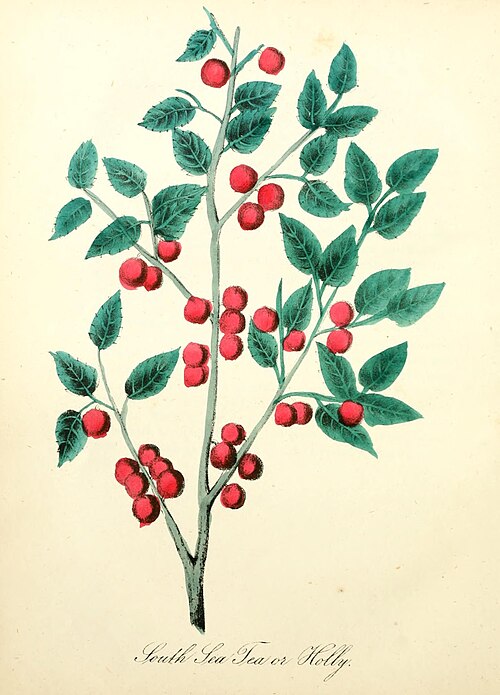
Long before coffee or imported tea became common in the American South, Indigenous communities were preparing a caffeinated drink from yaupon holly (Ilex vomitoria).
Yaupon grew naturally across much of the Southeast, including parts of Texas. Its leaves were harvested, prepared, consumed, and traded for centuries. Historical accounts, archaeological evidence, and oral traditions all point to the plant’s importance, though the record is uneven and shaped in part by colonial observers.
That matters, because yaupon was not used in exactly the same way everywhere. Preparation methods, meanings, and social roles varied by region and community. Even so, the broader pattern is clear: yaupon was a significant plant in the social, ceremonial, and trade networks of the American South.
A Native Beverage Plant
Yaupon was not introduced to the region as a crop. It grew within the homelands of many Indigenous communities, and its natural caffeine content made it unusual among native plants.
Evidence shows that yaupon leaves were harvested and brewed long before European contact. The drink appears in accounts tied to ceremony, hospitality, councils, diplomacy, and social drinking. The details differed from one community to another, but the importance of the plant is consistent across the record.
A Brief Timeline
Pre-contact era: Indigenous communities across the American South harvested, prepared, and consumed yaupon in daily and ceremonial life.
Around A.D. 1100: Archaeological evidence from Cahokia, near present-day St. Louis, suggests caffeinated Ilex beverages were consumed far beyond yaupon’s natural range.
1500s: European observers began documenting yaupon use in the Southeast and along parts of the Gulf Coast.
1600s–1700s: Colonial accounts described yaupon in ceremonies, councils, diplomatic gatherings, and social settings.
1800s–1900s: Coffee and imported tea became more common, and yaupon declined as a widely consumed beverage.
Late 20th century to present: Renewed interest in native plants, food traditions, and Indigenous history brought yaupon back into public conversation.
The “Black Drink”
One of the most familiar phrases tied to yaupon history is the “Black Drink.”
That term comes from colonial accounts, not from a single Indigenous language. European observers used it to describe a dark, caffeinated beverage made from yaupon and related plants.
Indigenous communities had their own languages and their own names for the plant and the drink. Some groups used terms such as cassina, while others had different language-specific names. There was never one universal Indigenous term across the Southeast.
Trade Routes
Yaupon’s history is especially important because of the evidence that it moved beyond its natural range.
The plant’s limited native distribution, combined with archaeological and historical evidence found outside that range, points to extensive Indigenous trade networks. Communities without direct access to yaupon likely obtained it through neighboring groups and established exchange routes.
Research at Cahokia has identified evidence of caffeinated Ilex beverages hundreds of kilometers from yaupon’s main growing areas. That suggests both plant material and cultural knowledge moved across long distances.
How Yaupon Was Used
Historical accounts suggest yaupon served several different roles, though those roles were not identical across all communities.
Commonly described uses include:
Purification and cleansing rituals.
Council and diplomatic gatherings.
Community ceremonies.
Hospitality and social drinking.
In some accounts, preparations connected to warfare or conflict.
These uses varied by place and time. Yaupon was culturally important, but its meaning was never fixed in one single form.
Yaupon in Texas
Texas matters in yaupon history because the plant grows naturally along parts of the Gulf Coast and throughout East Texas.
Some sources connect yaupon with Indigenous communities on the Texas coast, including the Karankawa, though the documentary record is thinner in Texas than in some eastern regions. Even so, yaupon was present throughout coastal Texas and was likely used by Indigenous communities living within its native range.
In coastal woodlands, river corridors, live oak thickets, and other suitable habitats, yaupon would have been a familiar part of the landscape.
Reading the Sources
Many early written descriptions of yaupon come from European observers in the 1500s, 1600s, and 1700s. Those accounts are useful, but they are not complete or neutral.
European writers often filtered Indigenous practices through their own assumptions. Some focused on ceremony while saying little about everyday use. Others misunderstood what they saw or reduced complex traditions to simplified descriptions.
That is why historians do not rely on colonial accounts alone. Archaeology, oral traditions, Indigenous perspectives, and plant evidence all help build a fuller picture of yaupon’s history.
Disruption and Decline
European colonization brought profound disruption to Indigenous communities throughout North America.
Displacement, disease, warfare, forced assimilation, and land loss affected countless traditions and knowledge systems, including yaupon practices. As imported coffee and tea became more widely available, yaupon declined as a common beverage.
By the 20th century, many people knew yaupon mainly as a landscape shrub, not as a plant with a long cultural history.
A Return of Interest
Yaupon’s modern revival has brought new attention to its Indigenous history. Researchers, historians, Indigenous communities, conservation groups, and producers have all contributed to a broader public conversation about yaupon’s place in the American South.
Yaupon should not be presented as a newly discovered beverage, nor should it be separated from the cultures that understood and used it long before modern commercial production. A respectful approach means being clear about what is documented, what is inferred, and what remains uncertain.
Why It Matters Now
The revival of yaupon is not the creation of a new beverage. It is the return of attention to a plant with a long and documented history.
That history connects yaupon to Indigenous knowledge, regional trade, native landscapes, and the broader cultural story of the American South. Many details remain uncertain or vary by community, but the central point is clear: yaupon held cultural importance for centuries before it became a modern tea product.
Further Reading & Sources
USDA Forest Service – Fire Effects Information System: Ilex vomitoria
USDA Natural Resources Conservation Service – Plant Guide: Yaupon (Ilex vomitoria)
Texas A&M Forest Service – Texas Tree ID: Yaupon Holly
Lady Bird Johnson Wildflower Center – Native Plant Database
Native American Ethnobotany Database – Ilex vomitoria
Florida Division of Historical Resources – “The Yaupon”
Comparative Studies in Society and History – “Ceremony, Medicine, Caffeinated Tea: Unearthing the Forgotten Faces of the North American Stimulant Yaupon”
Note: Much of what is known about Indigenous yaupon use comes from archaeology, oral traditions, and colonial-era accounts. Because those sources vary in quality and perspective, historians continue to debate some aspects of yaupon's historical use.
About

Featured Posts


Explore Topics

Related Post
Jun 1, 2026
Explore the history of yaupon in Texas, from Indigenous use and regional trade networks to its decline, rediscovery, and modern revival as North America's only native caffeinated plant.
Jun 1, 2026
Yaupon holly is North America's only naturally caffeinated native plant. Once widely used by Indigenous communities across the American South, yaupon faded from public awareness as coffee and tea became dominant. Today, growers, researchers, and conservationists are helping bring this historic Texas plant back into the spotlight.