How to Identify Yaupon Holly: Texas's Native Caffeinated Plant
Learn how to identify yaupon holly by its small evergreen leaves, red berries, smooth gray bark, and dense branching habit. This guide explains key identification features, common look-alikes, and where yaupon grows across Texas.
Texas Yaupon Editorial Team
Reading Time: 6 minutes
Category: Plant Identification & Ecology
Updated: June 2026
Key Takeaways
Yaupon holly (Ilex vomitoria) is an evergreen shrub or small tree native to Texas and much of the southeastern United States.
It can be identified by its small oval leaves, dense branching structure, and smooth gray bark.
Female plants produce bright red berries that often remain through winter. Female plants require a nearby male yaupon holly for pollination and berry production.
Yaupon is commonly found in forests, coastal habitats, river corridors, and native landscapes throughout Texas.
Learning to identify yaupon helps support conservation, responsible foraging, and appreciation of Texas native ecosystems.
Introduction
As interest in yaupon tea continues to grow, more Texans are curious about the plant behind North America's only naturally caffeinated tea plant.
Yaupon often grows in nearby parks, forests, ranchlands, and residential landscapes. The plant may appear unremarkable, but several distinctive characteristics make it easy to identify once you know what to look for.
Whether you're interested in native plants, wildlife habitat, or Texas ecology, learning to recognize yaupon is useful.
Quick Field Identification
If you're standing in front of a plant and trying to determine whether it is yaupon, look for:
Small evergreen leaves 1–3 centimeters (0.4–1.2 inches) long
Smooth or lightly scalloped leaf margins
Leaves arranged alternately rather than directly opposite each other
Dense branching structure
Bright red berries on female plants
Smooth gray bark on mature stems
No single characteristic is definitive, but the combination of these features is often enough to distinguish yaupon from other common Texas shrubs and small trees.
What Is Yaupon Holly?
Yaupon holly (Ilex vomitoria) is a member of the holly family and one of Texas's most widespread native woody plants.
Unlike the spiny holly species often associated with holiday decorations, yaupon has small, smooth leaves and a dense growth habit. It remains green year-round and can grow successfully in many different environments.
Depending on location and growing conditions, yaupon may appear as:
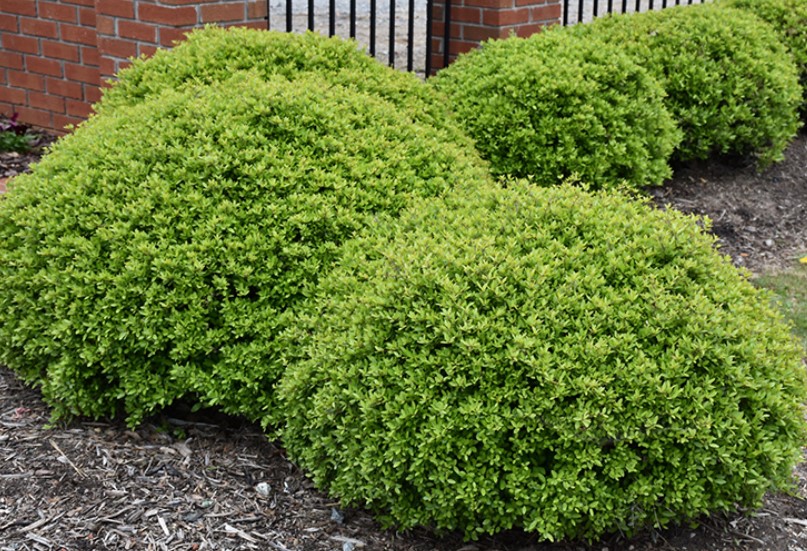
A low, dense shrub
A multi-stem understory tree
A small tree reaching 6 to 9 meters (20 to 30 feet) in height
Identifying the Leaves
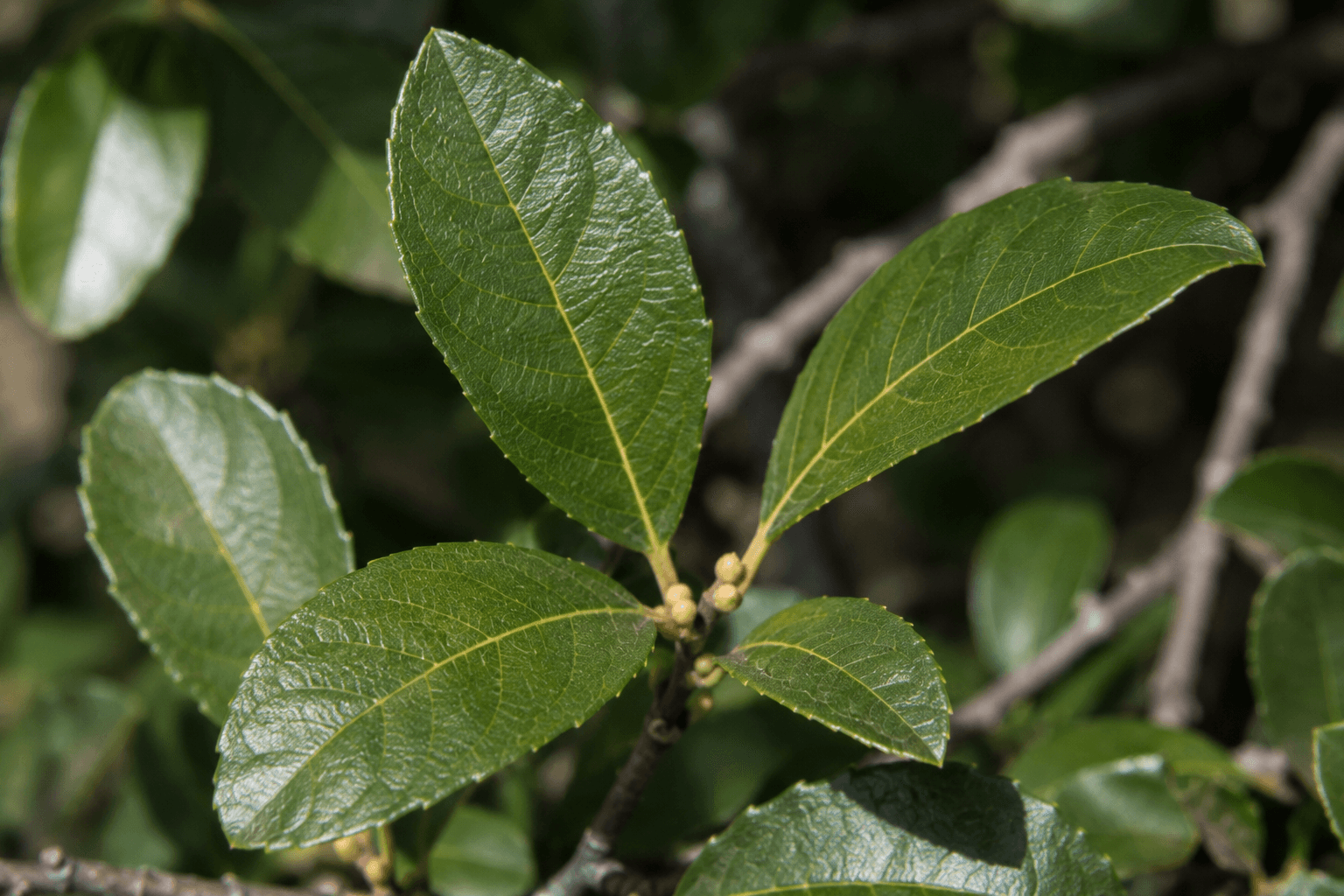
The leaves are usually the easiest feature to recognize.
Yaupon leaves are:
Small and oval-shaped
Typically 1–3 centimeters (0.4–1.2 inches) long
Thick and leathery
Glossy dark green on the upper surface
Lighter green underneath
Smooth along the edges with slight rounded scalloping
Unlike many other holly species, yaupon leaves do not have sharp spines or pointed teeth.
One of the most reliable identification features is leaf arrangement. Yaupon leaves emerge alternately along the stem rather than directly opposite one another.
This combination of small size, evergreen color, smooth edges, and alternate arrangement is often the quickest way to identify yaupon.
Growth Habit and Structure
Yaupon is known for its dense branching structure.
Individual stems frequently emerge from the base of the plant, creating a multi-trunk appearance. Branches are closely spaced, producing thick foliage that can form nearly impenetrable thickets in some environments.
In forests, yaupon often grows beneath larger trees where it forms part of the understory. In open landscapes, it may develop into a rounded shrub or small tree.
This dense growth habit provides year-round shelter and nesting habitat for wildlife.
Bark and Stems
While leaves are usually the primary identification feature, bark characteristics can provide additional confirmation.
Mature yaupon bark is generally:
Light gray in color
Smooth to slightly textured
Thin compared to many hardwood species
Young stems often appear:
Greenish to light brown
Slender and flexible
Densely clustered
Because bark varies with age and growing conditions, it is most useful when combined with other identifying features.
Bright Red Winter Berries
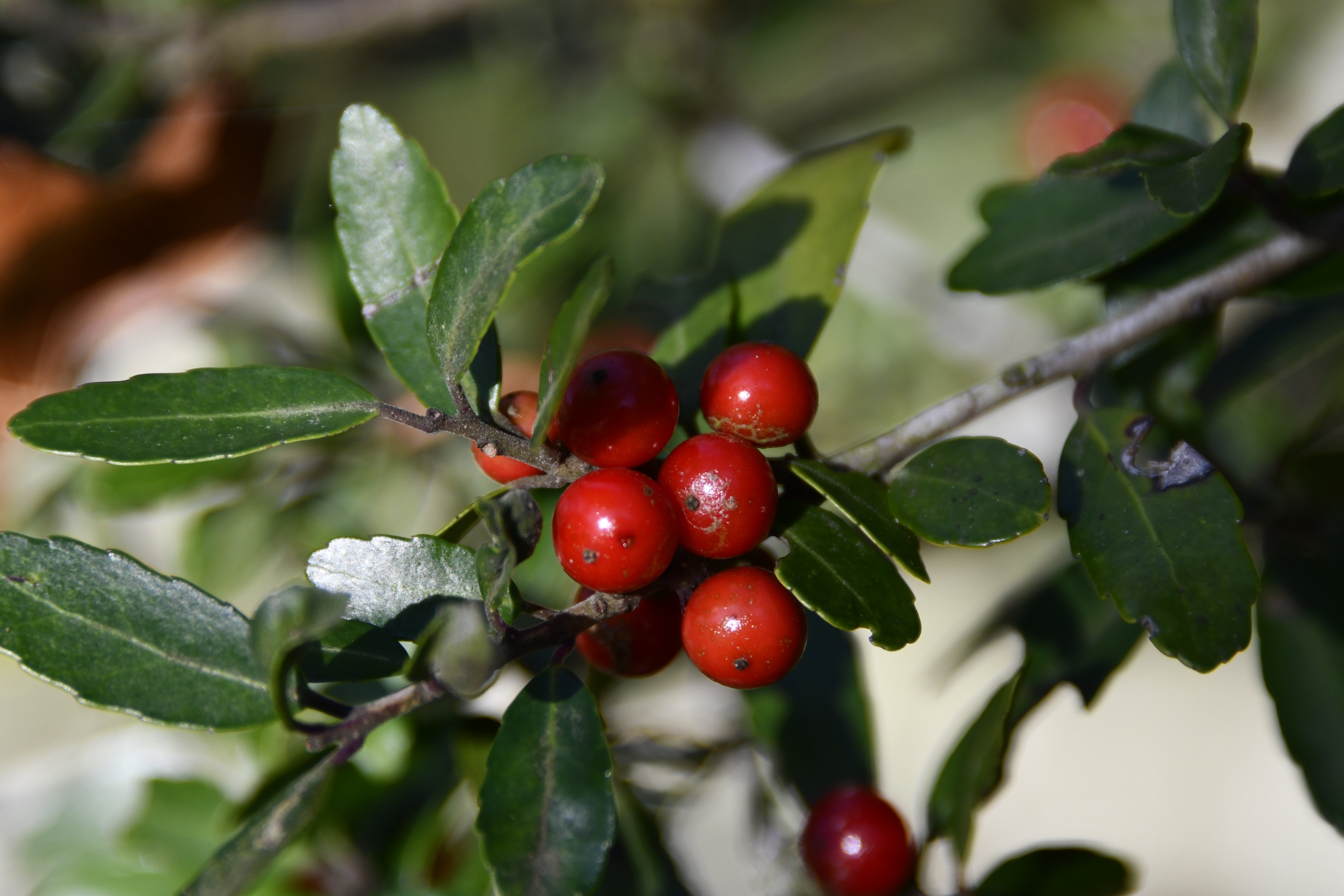
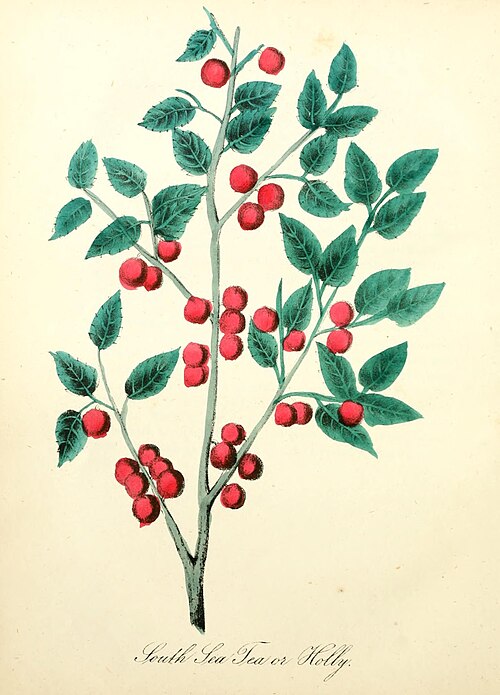
One of yaupon's most recognizable features is its display of red berries.
Only female plants produce berries. Male plants produce pollen but no fruit. Female yaupon hollies require pollen from a nearby male plant to produce berries.
The berries are:
Bright red
Roughly 4–6 millimeters (0.16–0.24 inches) in diameter
Produced in clusters along the stems
Often visible from autumn through winter
The colorful berries provide food for numerous bird species.
In winter, berry-covered yaupon shrubs can be among the most visually distinctive native plants in Texas woodlands.
Flowers
Yaupon flowers are small and easy to overlook.
Blooming typically occurs during spring.
The flowers are:
White to cream-colored
Less than 1 centimeter (0.4 inches) wide
Lightly fragrant
Attractive to bees and other pollinators
Although not especially showy, these blooms provide important support for native insect populations.
Where Yaupon Grows
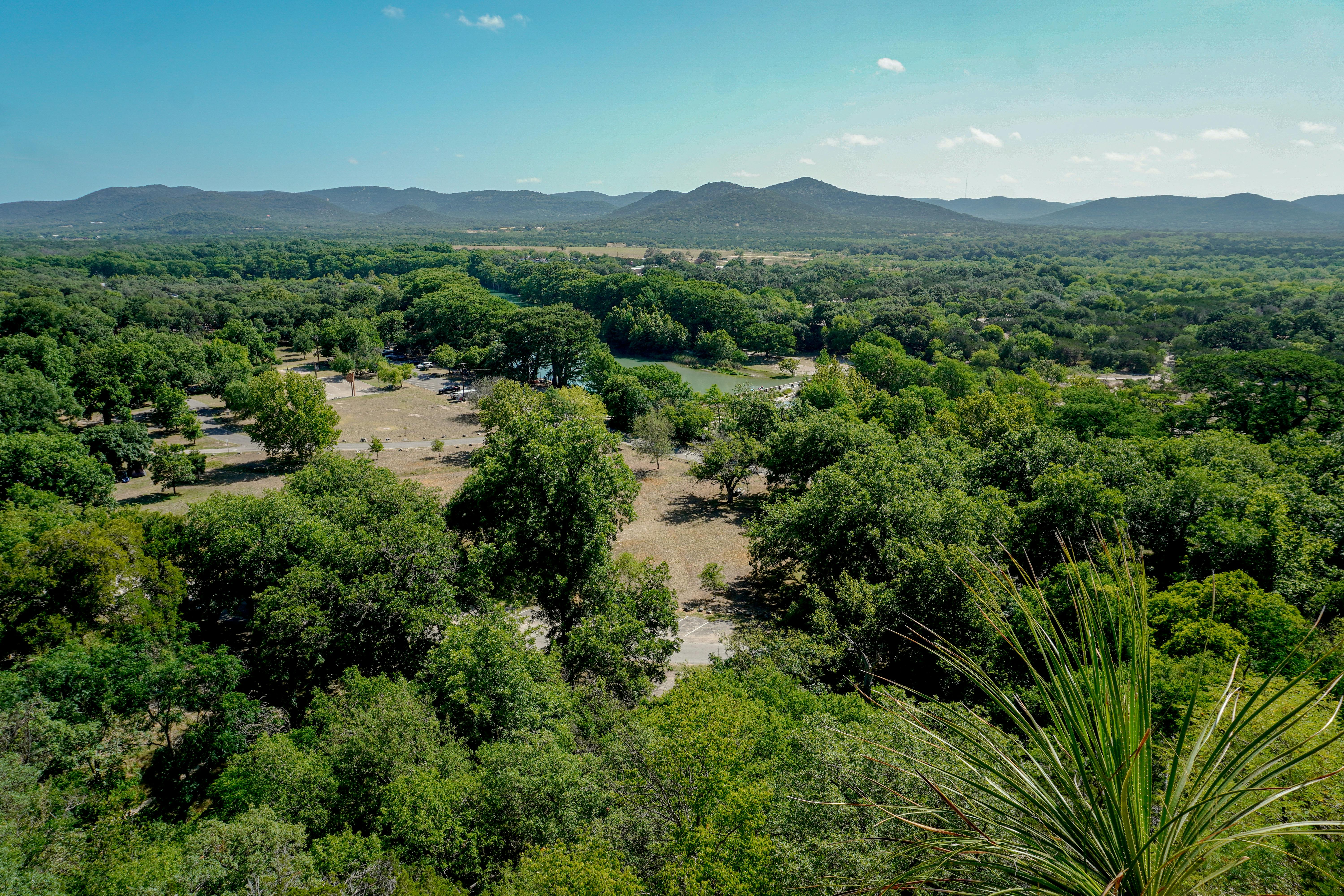
Yaupon occurs naturally across much of eastern and central Texas.
Common habitats include:
Pine forests of East Texas
Coastal woodlands
River and creek corridors
Post Oak Savannah regions
Maritime forests near the Gulf Coast
Oak woodlands and mixed hardwood forests
The species can tolerate drought, flooding, sandy soils, clay soils, and a wide range of sunlight conditions.
Common Plants Confused with Yaupon
Several native and ornamental plants are sometimes mistaken for yaupon.
Plant | Leaves | Berries/Fruit | Growth Habit |
Yaupon Holly (Ilex vomitoria) | Small, oval, evergreen leaves with smooth or lightly scalloped edges; no sharp spines | Bright red berries on female plants, often persisting through winter | Dense, multi-stem shrub or small tree; evergreen |
American Holly (Ilex opaca) | Larger, thicker leaves with prominent spines along the margins | Red berries similar in color but often larger and less densely clustered | Typically grows into a larger single-trunk tree |
Possumhaw Holly (Ilex decidua) | Deciduous leaves that are larger and thinner than yaupon leaves | Bright red berries that remain on bare branches after leaf drop | Large shrub or small tree; loses leaves in winter |
Inkberry (Ilex glabra) | Evergreen leaves somewhat similar in shape but generally longer and less scalloped | Dark purple to black berries rather than red | Rounded evergreen shrub with a more open form |
Ornamental Landscape Hollies | Often larger leaves with pronounced spines or distinctive cultivars | Berry color and abundance vary by cultivar | Growth habit ranges from compact shrubs to large hedges or trees |
Paying attention to leaf size, texture, berry color, and whether the plant is evergreen or deciduous usually makes identification straightforward.
Why Identification Matters
Accurate identification matters because yaupon is increasingly used in native landscaping, wildlife habitat work, and tea production.
Accurate identification helps people:
Understand native Texas ecosystems
Support conservation efforts
Make informed landscaping decisions
Recognize wildlife habitat
Learn about yaupon's historical use as a caffeinated beverage plant
For those interested in harvesting yaupon, proper identification is an essential first step before learning responsible foraging practices.
Conclusion
Yaupon holly is common across much of Texas, but it is easy to overlook until you know its key features. Small evergreen leaves, dense branching, smooth gray bark, and red winter berries on female plants are the strongest clues.
Whether found along a creek, in a forest understory, or in a neighborhood landscape, yaupon connects Texas ecology, wildlife habitat, and the state’s native caffeinated tea tradition.
Related Articles
About

Featured Posts

Explore Topics